
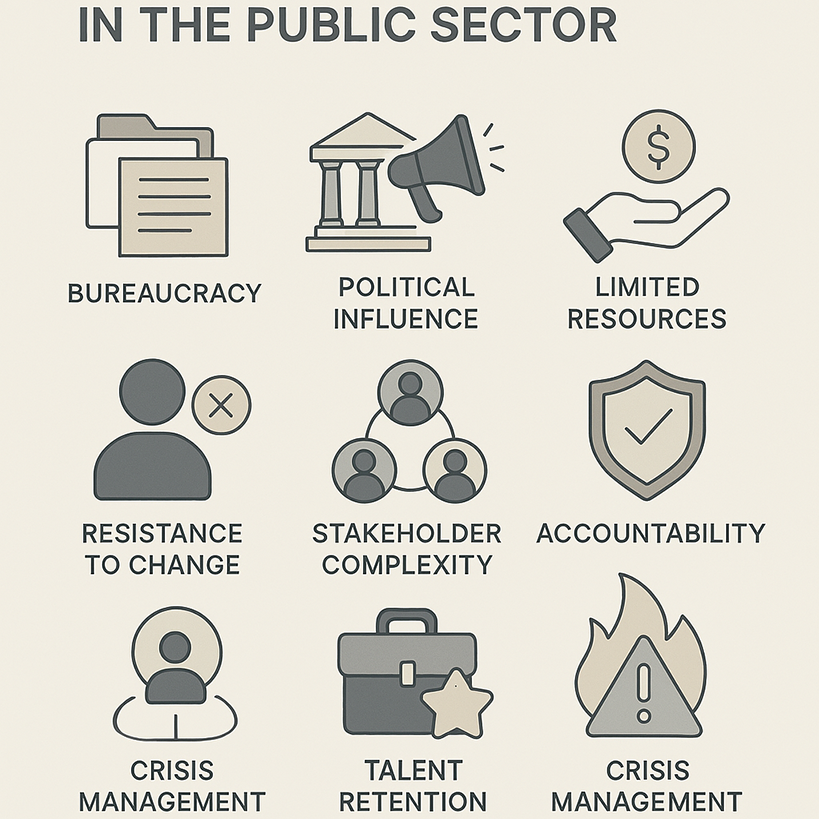
Leadership in the public sector is a noble pursuit—but it’s not without its hurdles. Unlike the private sector, where agility and profit often drive decisions, public leaders must balance service delivery with accountability, limited resources, and political oversight. Here’s a closer look at the most pressing challenges they face:
1. Bureaucratic Constraints
Public leaders often operate within rigid frameworks of rules and regulations. While these structures ensure fairness and compliance, they can also slow down innovation and responsiveness.
2. Political Influence
Leadership decisions are frequently shaped—or disrupted—by political agendas, elections, and shifting policy priorities. This can lead to short-term thinking and instability in long-term planning.
3. Limited Resources
Budget cuts, staffing shortages, and outdated infrastructure are common. Leaders must find creative ways to do more with less, often under intense public scrutiny.
4. Accountability and Transparency
Public leaders are held to high standards of integrity. Every decision is subject to public and media scrutiny, requiring a delicate balance between transparency and operational efficiency.
5. Resistance to Change
Institutional inertia can be a major barrier. Long-standing practices and risk-averse cultures often resist modernization, even when change is clearly needed.
6. Stakeholder Complexity
From citizens and unions to elected officials and advocacy groups, public leaders must navigate a web of competing interests and expectations.
7. Talent Retention
Attracting and retaining skilled professionals is a challenge, especially when competing with the private sector’s salaries and perks. Career development and recognition are key to keeping talent engaged.
8. Crisis Management
Whether it’s a pandemic, natural disaster, or economic downturn, public leaders are often on the front lines. They must make high-stakes decisions quickly, with limited information and high visibility.
Conclusion
Public sector leadership demands resilience, adaptability, and a deep commitment to service. By understanding and addressing these challenges, leaders can build stronger institutions and deliver better outcomes for the communities they serve.