
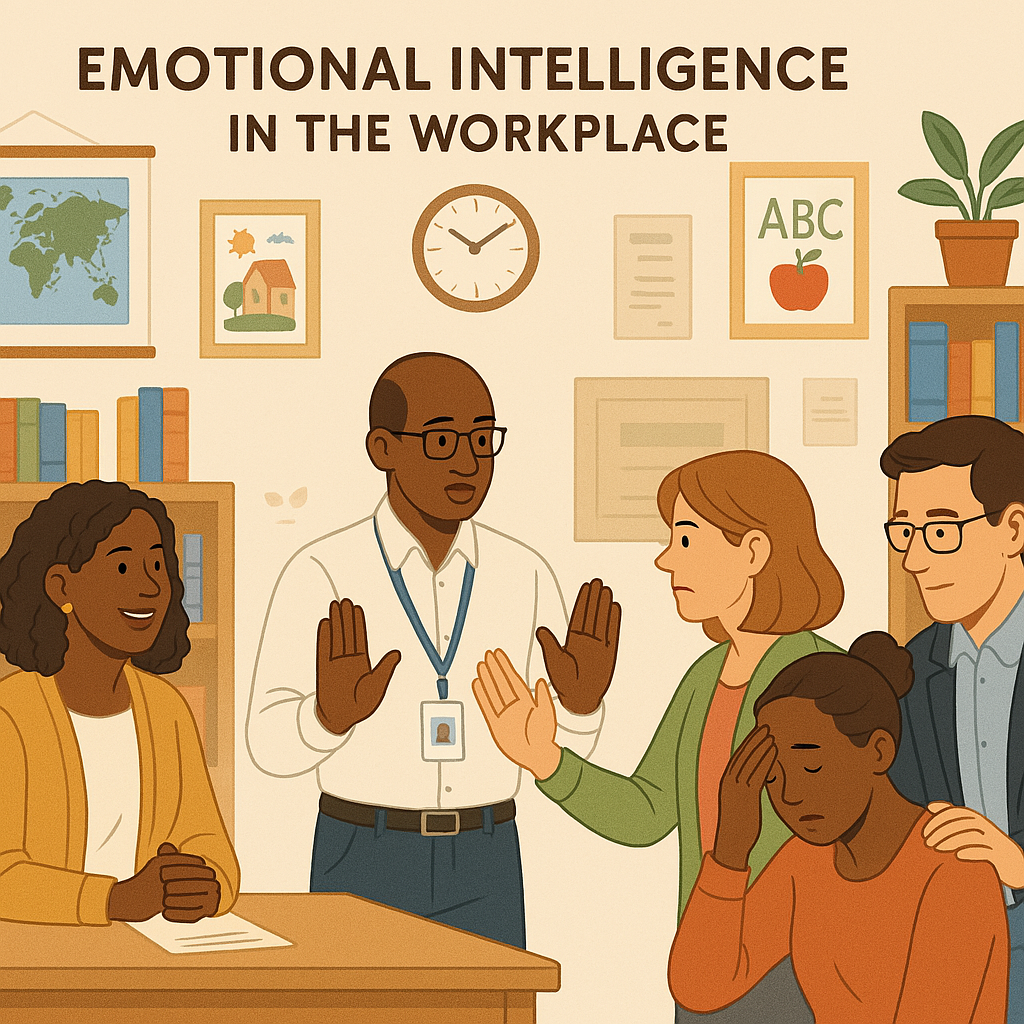
In the dynamic environment of educational institutions, where collaboration, communication, and compassion are essential, emotional intelligence (EI) plays a pivotal role. Whether you’re a teacher, administrator, or support staff member, your ability to understand and manage emotions—both your own and those of others—can significantly impact the culture and effectiveness of your workplace.
What Is Emotional Intelligence?
Emotional intelligence refers to the ability to recognize, understand, and manage our own emotions while also being attuned to the emotions of others. It encompasses five key components:
- Self-awareness – Recognizing your own emotions and how they affect your thoughts and behaviour.
- Self-regulation – Managing your emotions in healthy ways, especially in stressful situations.
- Motivation – Harnessing emotions to pursue goals with energy and persistence.
- Empathy – Understanding the emotions of others and responding with compassion.
- Social skills – Managing relationships to move people in desired directions, whether in leading, negotiating, or working as part of a team.
Why Emotional Intelligence Matters in Schools
Educational institutions are more than just places of learning—they are communities. Here’s how EI enhances the workplace in schools:
- Improved Communication: Teachers and staff with high EI communicate more effectively, reducing misunderstandings and fostering a more collaborative environment.
- Conflict Resolution: EI helps in de-escalating tensions and resolving conflicts constructively, which is crucial in high-stress environments like schools.
- Stronger Leadership: Leaders with emotional intelligence inspire trust, motivate staff, and create a positive school culture.
- Better Student Outcomes: Emotionally intelligent educators model positive behaviour, which can influence students’ social-emotional development and academic success.
- Enhanced Well-being: EI contributes to lower stress levels and better mental health among staff, reducing burnout and turnover.
Cultivating Emotional Intelligence in Educational Settings
Here are some strategies to foster EI in your institution:
- Professional Development: Offer training sessions focused on emotional intelligence, communication, and conflict resolution.
- Reflective Practices: Encourage journaling, peer feedback, and mindfulness to enhance self-awareness.
- Supportive Culture: Create a safe space for open dialogue, emotional expression, and mutual support.
- Mentorship Programs: Pair experienced staff with newer employees to model emotionally intelligent behaviour.
Final Thoughts
Emotional intelligence isn’t just a “nice-to-have” in educational institutions—it’s a necessity. By prioritizing EI, schools can create more empathetic, resilient, and effective workplaces that benefit both staff and students.
Here are some compelling statistics about emotional intelligence (EI) in educational settings that you can include in your blog post:
Emotional Intelligence in Schools: Key Statistics
- Students with high emotional intelligence perform 11% better academically. Emotional regulation enhances focus, memory retention, and classroom engagement [1].
- Schools that implement emotional intelligence or SEL (Social-Emotional Learning) programs report 24% fewer disciplinary incidents. These programs help students manage conflict, reduce aggression, and build empathy[1].
- Teachers trained in emotional intelligence techniques report a 20% improvement in classroom management and student engagement [2].
- Educators with high EI are 3 times more likely to report job satisfaction and are less prone to burnout, contributing to better staff retention [2].
- Students in emotionally intelligent classrooms show a 22% increase in social behaviours, such as cooperation and empathy, which are essential for a positive learning environment [1].
References