
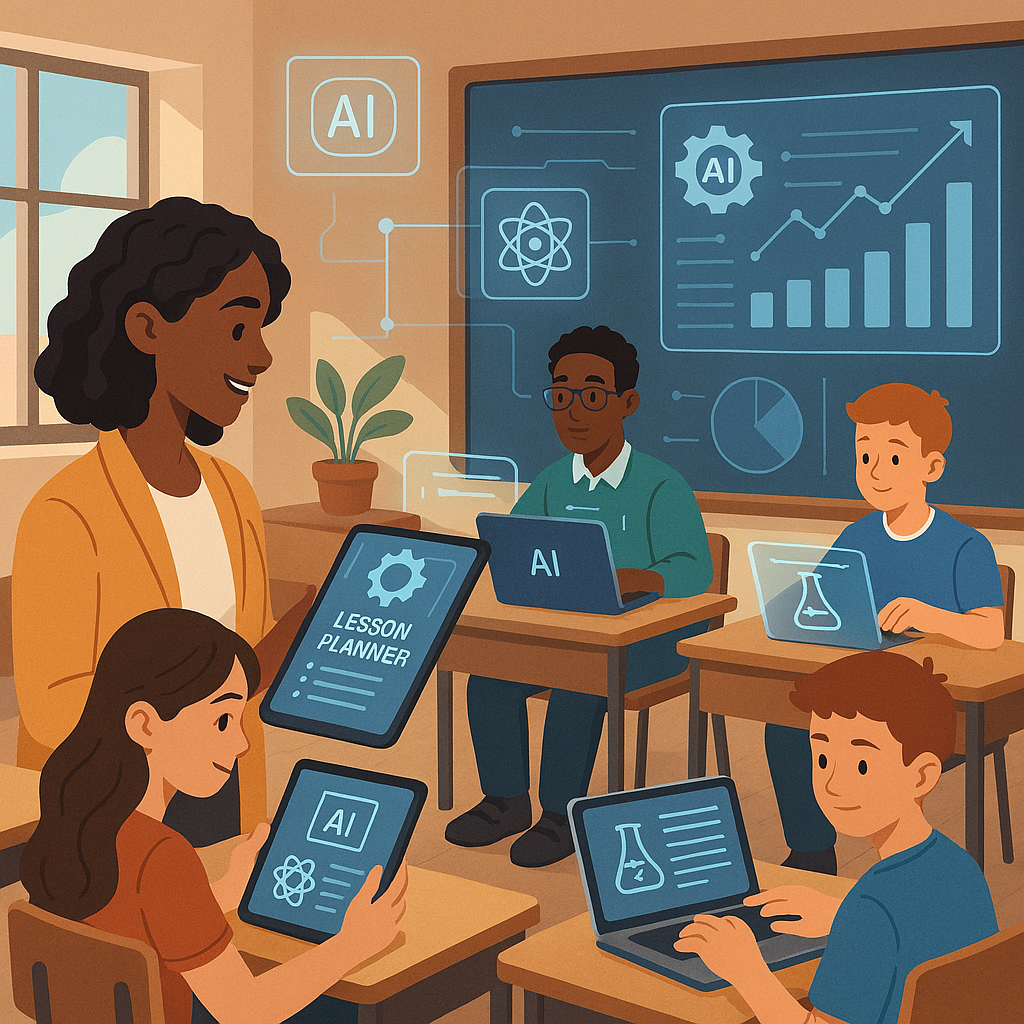
In 2025, the integration of Artificial Intelligence (AI) and educational technology (EdTech) is no longer a futuristic concept—it’s a present-day reality transforming classrooms around the globe. From personalized learning platforms to AI-powered tutoring systems, these tools are reshaping how students learn and how educators teach.
But as adoption grows, so does the need for responsible and ethical use.
The State of AI in Education: 2025 Statistics
Recent data highlights the rapid growth and impact of AI in education:
- 86% of students worldwide now use AI tools to support their learning, from grammar checkers to math solvers and virtual tutors.
- 60% of teachers incorporate AI into lesson planning, grading, and classroom engagement.
- 87% of schools globally have adopted at least one AI-powered solution, such as adaptive learning platforms or administrative automation tools.
- The AI in education market is valued at $7.71 billion in 2025, with projections reaching $32.27 billion by 2030.
- 51% of educators report using AI-based educational games to enhance student motivation and interactivity.
These numbers reflect a clear trend: AI is becoming an essential part of modern education.
Best Practices for Using AI and EdTech Responsibly
To ensure these tools enhance rather than hinder learning, educators, students, and institutions must follow a set of guiding principles:
1. Transparency and Awareness
- Clearly communicate when and how AI tools are being used.
- Educate students about the capabilities and limitations of AI.
2. Ethical Use and Academic Integrity
- Encourage students to use AI as a learning aid, not a shortcut.
- Promote original thinking and discourage plagiarism or over-reliance on AI-generated content.
3. Data Privacy and Security
- Choose tools that comply with data protection regulations (e.g., FERPA, GDPR).
- Limit the collection of personal data and ensure secure storage and access.
4. Teacher Empowerment
- Use AI to reduce administrative burdens, allowing teachers to focus on instruction and mentorship.
- Provide professional development to help educators integrate AI effectively.
5. Equity and Accessibility
- Ensure all students, regardless of socioeconomic background, have access to AI tools.
- Use technology to support diverse learning needs, including students with disabilities.
Real-World Applications of AI in Education
- Personalized Learning: Platforms like Squirrel AI and Century Tech adapt content to each student’s pace and style.
- AI Tutors: Tools like Khanmigo and ChatGPT help students practice problem-solving and writing.
- Automated Feedback: AI systems provide instant feedback on essays, coding assignments, and quizzes.
- Administrative Efficiency: AI streamlines scheduling, grading, and communication, freeing up time for educators.
Final Thoughts
AI and EdTech are not just tools—they are partners in education. When used responsibly, they can foster creativity, improve outcomes, and make learning more inclusive and engaging. But it’s up to us—educators, students, and policymakers—to ensure these technologies are used ethically, equitably, and effectively.